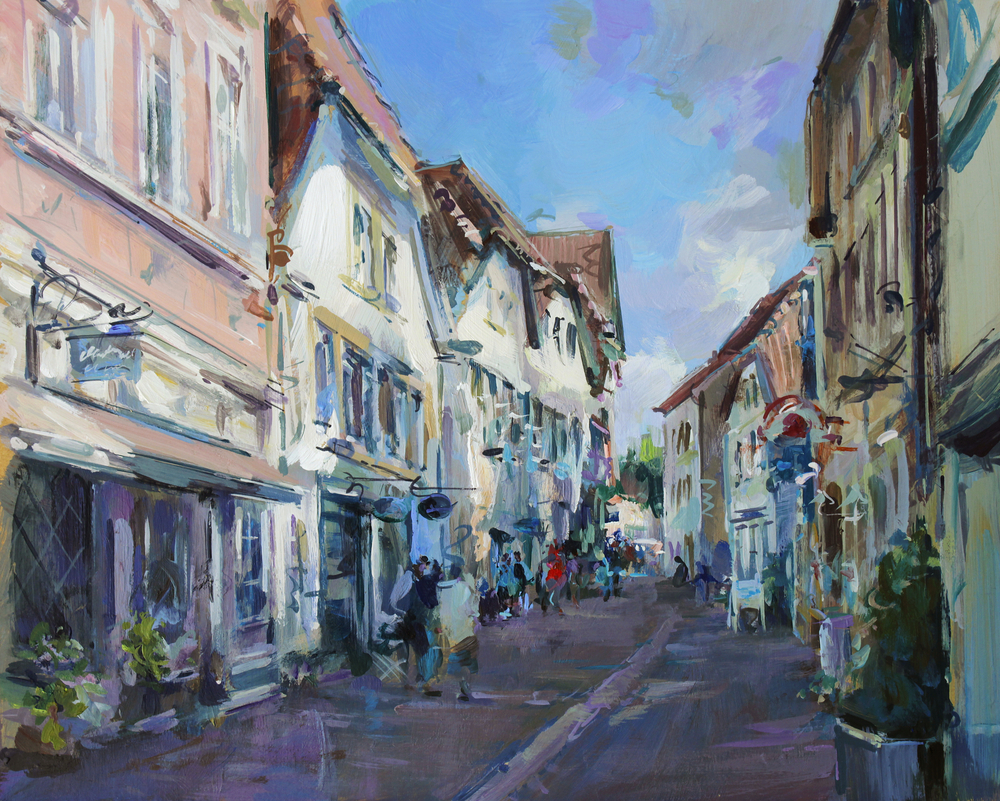
For many grandparents, painting is a pastime that provides both relaxation and a sense of accomplishment. While some prefer to experiment with abstract expressionism or impressionism, others have found that realism painting is the perfect style for them. In this article, we will explore why realism painting can be fun and rewarding for grandparents.
Realism painting involves the careful depiction of objects, people, and scenes as they appear in reality. This style of painting has been popular for centuries, and it continues to be admired for its attention to detail and accuracy. Many grandparents enjoy realism painting because it allows them to capture the beauty and complexity of the world around them in a way that is both satisfying and fulfilling.
One reason why realism painting is so appealing to grandparents is that it requires a great deal of patience and focus. Unlike abstract painting, which allows for more freedom and spontaneity, realism painting requires careful observation and planning. This can be especially rewarding for grandparents who enjoy taking their time and working methodically on a project.
Another reason why realism painting is popular among grandparents is that it provides a sense of nostalgia. Many older adults have vivid memories of a time when realism painting was more prevalent in popular culture, and they may feel a connection to this traditional style of art. For some, painting in the style of the old masters is a way of paying homage to the past and preserving a cultural tradition.
Additionally, realism painting can be a great way for grandparents to connect with their grandchildren. Many older adults enjoy sharing their knowledge and skills with younger generations, and teaching a grandchild how to paint in the style of the old masters can be a meaningful and rewarding experience. Not only does it provide an opportunity for grandparents to bond with their grandchildren, but it can also help to pass on a love of art and culture.
Of course, there are also practical benefits to realism painting for grandparents. For one, it can be a great way to stay mentally sharp and engaged. Studies have shown that engaging in creative activities can help to stave off cognitive decline and improve overall brain function. Painting in the style of the old masters can also be a great way to relieve stress and promote relaxation, which is especially important for older adults who may be dealing with health issues or other challenges.
Finally, many grandparents find that realism painting is simply a lot of fun. There is something deeply satisfying about creating a beautiful work of art that captures the essence of the world around us. Whether painting a still life, a landscape, or a portrait, there is always a sense of accomplishment that comes with completing a painting in the style of the old masters.
Realism painting can also be a way for grandparents to connect with other artists and art enthusiasts. Whether through local art classes, online communities, or art museums, there are many opportunities for older adults to share their work and learn from others. By participating in the broader art world, grandparents can stay connected to contemporary trends and techniques while also contributing their own unique perspective.
Of course, like any hobby, realism painting does require some investment in materials and equipment. However, many older adults find that the cost is worth it for the joy and fulfillment that painting brings. Additionally, there are many affordable options for those who are just starting out, such as beginner paint sets and pre-stretched canvases.
Realism painting is a rewarding and enjoyable pastime for grandparents of all ages. Whether you are an experienced artist or a beginner, there is always something new to learn and discover in the world of realism painting. So if you are a grandparent looking for a new hobby or a way to connect with your grandchildren, consider giving this traditional style of art a try. You may be surprised at how much joy and fulfillment it can bring to your life.