Cross stitching has been a cherished pastime for generations, capturing the hearts and hands of creative individuals worldwide. Today, we explore the art of cross stitching specifically for grandmas. The perfect blend of relaxation, creativity, and accomplishment, cross stitching offers a wealth of benefits and enjoyment for people of all ages. As a grandma, you may already have experience with this delightful craft, or perhaps you’re looking to learn something new to share with your grandchildren. Regardless of your background, this guide will walk you through the basics and help you rediscover the joy of cross stitching.
History and Tradition of Cross Stitching
The roots of cross stitching date back to ancient civilizations, with some of the earliest examples found in Egyptian tombs. Over time, this intricate needlework has evolved, with the Middle Ages and Victorian era marking significant milestones in its development. While styles and techniques have changed, the essence of cross stitching remains the same: creating beautiful, handmade designs by weaving small x-shaped stitches onto a fabric.
The Social and Emotional Benefits of Cross Stitching
Cross stitching offers a range of benefits that make it an ideal pastime for grandmas. First and foremost, it provides an opportunity to socialize with others who share your interests. Whether you join a local cross stitch group, attend workshops, or connect with fellow enthusiasts online, you’ll find a supportive community that fosters camaraderie and friendship.
Additionally, cross stitching can be a therapeutic form of self-expression, allowing you to channel your emotions and creativity into a tangible, beautiful piece of art. The repetitive nature of cross stitching can also help reduce stress, enhance focus, and provide a sense of accomplishment as you watch your designs come to life.
Getting Started with Cross Stitching
To begin your cross stitching journey, you’ll need a few basic supplies:
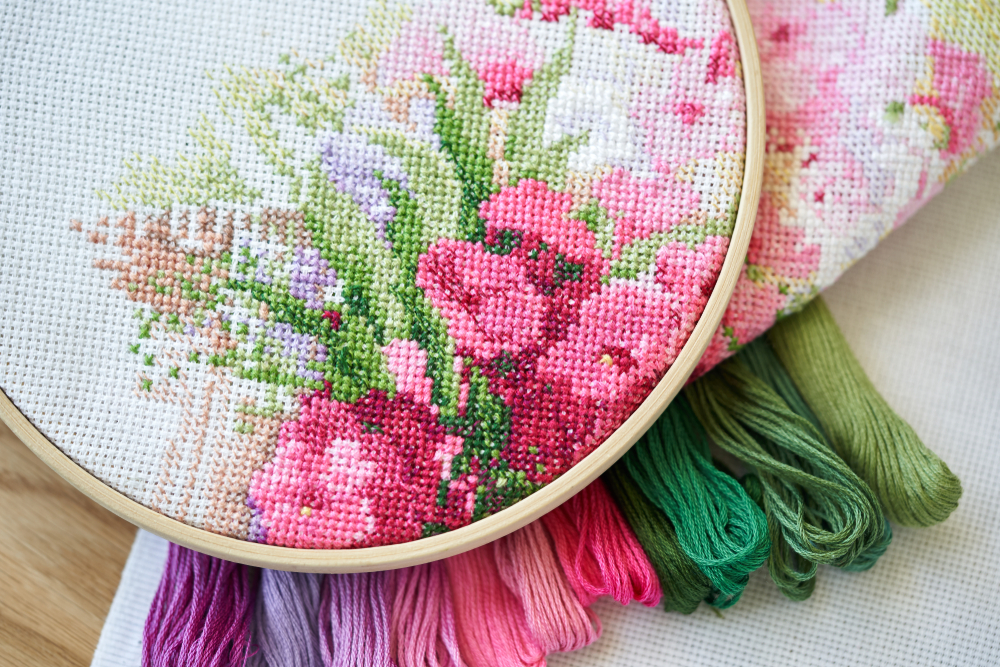
- Fabric: Aida cloth is the most common fabric for cross stitching, with various sizes and colors available. The fabric’s even weave makes it easy to count and maintain consistent stitch sizes.
- Embroidery floss: Made of six strands of cotton thread, embroidery floss comes in a vast array of colors. You can separate the strands to adjust the thickness of your stitches.
- Needle: Choose a tapestry needle (usually size 24 or 26) with a blunt tip to avoid splitting the fabric threads.
- Hoop or frame: These tools help keep your fabric taut and wrinkle-free as you stitch.
- Scissors: A small, sharp pair of embroidery scissors is essential for trimming floss and cutting fabric.
- Pattern: Counted cross stitch patterns are available in a variety of styles and skill levels. Choose a design that appeals to you and matches your experience level.
Cross Stitching Techniques
Once you’ve gathered your supplies, you’re ready to start stitching. Follow these basic steps:
- Prepare your fabric: Cut a piece of Aida cloth large enough for your pattern, leaving a 2-3 inch margin on all sides. If desired, secure the edges with masking tape or fabric glue to prevent fraying.
- Thread your needle: Separate the required number of strands from the embroidery floss and thread your needle, leaving a tail of about 2 inches. Do not knot the end.
- Find your starting point: Locate the center of your fabric and pattern. This will help ensure your design is centered on the cloth.
- Begin stitching: Following your pattern, make the first half of an “x” by bringing the needle up through the bottom left hole, down through the top right hole, and back up through the bottom right hole. Complete the “x” by going down through the top left hole. Repeat this process, working in rows or individual stitches as your pattern dictates.
- Secure your floss: When you finish a section of color or run out of floss, run the needle under a few completed stitches on the backside of your fabric to secure the thread. Trim any excess.
- Rinse and repeat: Continue stitching, changing colors as needed, until your pattern is complete.
Tips for Cross Stitching Success
As you embark on your cross stitching adventure, keep these tips in mind for a smooth and enjoyable experience:
- Practice patience: Cross stitching is a labor of love that requires time and dedication. Embrace the process and enjoy the meditative nature of each stitch.
- Maintain consistent tension: Aim for a uniform tension in your stitches, ensuring they are not too tight or too loose. This will result in a neat, polished finish.
- Keep your work clean: Wash your hands frequently while stitching to prevent transferring oils and dirt onto your fabric. Store your work in progress in a clean, safe place when not in use.
- Experiment with materials and techniques: As you gain confidence in your skills, explore different fabrics, floss types, and stitch variations to expand your cross stitching repertoire.
- Share your passion: Cross stitching can be a wonderful way to bond with your grandchildren, teaching them the value of patience, creativity, and perseverance. Encourage them to join you in creating their own cross-stitched masterpieces.
Cross stitching is a time-honored craft that continues to captivate and inspire people worldwide. As a grandma, you have the opportunity to rediscover this treasured art form, not only for your enjoyment but also as a way to connect with your grandchildren and the broader cross stitching community. By learning the basics and following the tips provided in this guide, you will be well on your way to creating stunning, handcrafted pieces that will be cherished for generations to come. So, pick up your needle and floss, and let your creativity flourish through the beautiful art of cross stitching.